
Own your online pres
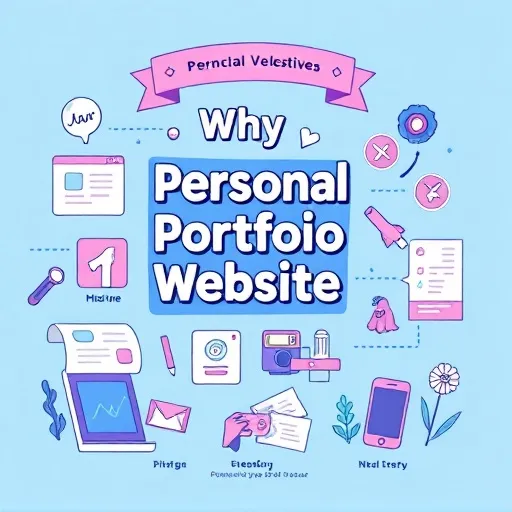
The Short Version: Why Personal Portfolio Websites Haven't Gone Out of Style
Here's the deal. Social media platforms come and go, and algorithms flip on you overnight. One day your content is everywhere, and the next it's buried under a mountain of recommended posts you never asked for. A personal portfolio website is the one slice of your online presence you actually own. You control the domain name, the web design, and every word of the content. Nobody can throttle your reach or rewrite the rules on you.
Beyond ownership, there's the credibility factor. When a recruiter, a potential client, or a collaborator is sizing you up, a well-built personal portfolio website signals that you take your work seriously. It's a curated space — not some random pile of posts, but a deliberate presentation of who you are and what you can do. That kind of intentionality stands out, especially when so much of the internet feels like pure noise.
And in 2026, with remote work and distributed teams being completely normal, your personal portfolio website often serves as your first impression. Someone halfway across the world might scroll through your site before they ever talk to you. So it needs to do a ton of heavy lifting in a very short amount of time.
What's Changed in 2026: New Rules for Building a Personal Portfolio Website With AI Personalization and Core Web Vitals
A few years back, a portfolio site was basically a digital resume with a handful of project screenshots. That still works, but the bar has risen. Here are the shifts that matter right now.
1. AI-Assisted Personalization and Adaptive Content Are Expected, Not Optional
Visitors are used to content that adapts to them — not in a creepy way, but in a helpful way. Picture a well-designed personal portfolio website that surfaces case studies relevant to the visitor's industry, or shows different project highlights depending on whether someone arrived from a design-focused search versus a technical one. This kind of intelligent content routing is becoming standard. You don't need to build a complex system, but you should think about how your content can be organized to serve different audiences fast.
2. Performance, Page Speed, and Core Web Vitals Are Non-Negotiable
Search engines have been tightening the screws on page experience for years, and by 2026 the standards are strict. Slow-loading images, layout shifts, clunky navigation — these don't just annoy visitors, they actively hurt your visibility. If your personal portfolio website takes more than a couple of seconds to load, you're losing people before they even see your work. Optimize images, use modern file formats, and keep your code lean. This is table stakes now.
3. Structured Content and Schema Markup Win
Search engines lean heavily on structured data to understand what a page is about. For a personal portfolio website, that means using schema markup to clearly label your projects, your skills, your professional identity, and any testimonials or reviews. When you mark up your content properly, you make it easier for search engines to feature your site in rich results — those enhanced listings that include images, ratings, or other details. It's a small technical step with a big visibility payoff.
4. Mobile-First Design and Responsive Layouts Aren't Buzzwords — They're the Default
Most people will find your personal portfolio website on a phone. If it isn't designed mobile-first, it's probably frustrating to use. Touch targets, readable text sizes, swipe-friendly galleries — these details matter. Test your site on actual devices, not just a resized browser window.
SEO for Your Personal Portfolio Website: The Practical Playbook for Keyword Research
Now let's get into the part a lot of creatives and technical folks skip: optimization. It's easy to build a beautiful site that nobody finds. Here's how to make sure your personal portfolio website actually shows up when people search for what you do.
Keyword Research: Start With How People Actually Search
Think about what someone would type into a search bar if they were looking for someone with your skills. It's rarely your name. It's usually a mix of role, skill, and location or industry. So your keyword strategy should include a blend of:
- Primary keywords that describe your role or discipline
- LSI keywords — related terms and phrases that search engines associate with your main topic. These help you build context and show depth
- Long-tail phrases that capture specific queries, like "freelance [skill] for [industry]" or "portfolio examples for [specific project type]"
Don't stuff these into your pages. Use them naturally in your headings, project descriptions, and about section. The goal is to write like a human while still covering the terms that matter for your personal portfolio website.
On-Page Optimization: The Title Tags and Meta Descriptions Basics That Still Work
Every page on your personal portfolio website should have a clear, descriptive title tag and a meta description that tells people what they'll find. Your H1 should state what the page is about in plain language. Subheadings should break up content logically. Internal links should connect related projects or sections so both visitors and search engines can navigate your site easily.
One thing people overlook: alt text on images. If your personal portfolio website is heavy on visuals, alt text is how search engines understand what those images show. It's also an accessibility requirement, which brings us to the next point.
Accessibility and Semantic HTML Are an SEO Issue Too
Search engines reward sites that are usable by everyone. That means proper heading hierarchy, sufficient color contrast, keyboard navigation, and screen-reader-friendly markup. Accessibility isn't just a nice-to-have; it's a signal that your personal portfolio website is well-built. And frankly, it's the right thing to do.
Technical SEO: URL Structure, Sitemaps, and the Stuff Under the Hood
Make sure your personal portfolio website has a clean URL structure, a sitemap that search engines can crawl, and fast server response times. If you're using a content management system or a site builder, check that it produces clean, semantic HTML. Avoid heavy scripts that block rendering. And keep an eye on your crawl budget — if your portfolio has hundreds of pages (unlikely, but possible with a large project archive), make sure the important ones are easy to find.
Content Strategy: Case Studies, About Page, and Contact Page Must-Haves for 2026
Your personal portfolio website isn't just a gallery. It's a narrative. Here's a structure that works well right now.
Homepage: Clarity and a Strong Call to Action Over Cleverness
Your homepage should answer three questions in about five seconds: Who are you? What do you do? How can someone work with you or learn more? A clear headline, a short intro, and a strong call to action (like "view my work" or "get in touch") go a long way. Don't make people guess.
Case Studies: Depth and Storytelling Beat Quantity
Three deep case studies are worth more than twenty shallow project thumbnails. For each project, explain the problem, your approach, the outcome, and what you learned. Include visuals, but also include context. Search engines love substantive content, and so do human visitors. This is also where LSI keywords fit in naturally — you'll describe tools, methods, industries, and results, all of which add semantic richness to your page.
About Page: Human, Specific, and Scannable
This is where your personality can shine. Talk about your background, your interests, and how you work. But keep it scannable. Use subheadings and short paragraphs. And include a clear photo — people connect with faces.
Contact Page: Frictionless User Experience
Make it easy. A simple form, an email address, and maybe a link to a scheduling tool. Don't hide your contact info behind a maze of links on your personal portfolio website.
Common Mistakes to Avoid: Keyword Stuffing, Metadata, and Mobile Performance
Even well-intentioned portfolio sites run into the same traps. Here's what to watch out for.
- Ignoring mobile performance. A beautiful desktop site that's broken on a phone is a liability.
- Keyword stuffing. If your copy reads like it was written for a search engine instead of a person, rewrite it.
- No clear calls to action. Visitors should always know what to do next.
- Outdated content. If your last project is from three years ago, it raises questions. Keep it current.
- Neglecting metadata. Title tags and meta descriptions are your first impression in search results. Don't leave them blank or generic.
The best personal portfolio website in 2026 is one that feels genuinely human to visit and is technically solid enough to be found. Those two goals aren't in conflict — they reinforce each other. When you write clear, substantive content, structure it well, and make it fast and accessible, you're doing right by both your visitors and the search engines that connect them to you. So if you've been putting off building or refreshing your personal portfolio website, consider this your nudge. Start with a clear sense of who you're trying to reach, build a site that loads quickly and works on any device, write about your work in a way that's honest and detailed, and optimize the technical SEO details so people can actually find you. Do that, and your personal portfolio website becomes more than a website — it becomes a career asset that works for you around the clock.